Microsoft first began development of the Interface Manager (subsequently
renamed Microsoft Windows) in September 1981.
Although the first
prototypes used
Multiplan and Word-like menus at the bottom of the screen, the interface
was changed in 1982 to use pull-down menus and dialogs, as used on the
Xerox Star.
Microsoft finally announced Windows in November 1983, with pressure from
just-released
VisiOn and
impending
TopView.
This was after the release of the
Apple Lisa,
and before Digital Research announced
GEM, and
DESQ
from Quarterdeck and the
Amiga
Workbench , or
GEOS/GeoWorks Ensemble,
IBM OS/2,
NeXTstep or
even DeskMate
from Tandy.
Windows promised an easy-to-use graphical interface, device-independent
graphics and multitasking support.
The development was delayed several times, however, and the Windows 1.0
hit the store shelves in November 1985. The selection of applications was
sparse, however, and Windows sales were modest.
 Windows
1.0 package, included: MS-DOS Executive, Calendar, Cardfile, Notepad,
Terminal, Calculator, Clock, Reversi, Control Panel, PIF (Program Information
File) Editor, Print Spooler, Clipboard, RAMDrive, Windows Write, Windows Paint.
-
 |
Click here for more photos off WINDOWS 1.01
Thanks to Oliver Schade.
Windows 2.0
introduced in the fall of 1987, provided significant
usability improvements to Windows. With the addition of icons and overlapping
windows, Windows became a viable environment for development of major
applications (such as Excel, Word for Windows, Corel Draw!, Ami, PageMaker and
Micrografx Designer), and the sales were spurred by the runtime ("Single
Application Environment") versions supplied by the independent software
vendors.
In late 1987 Microsoft released Windows/386. While it was
functionally equivalent to its sibling, Windows/286, in running Windows
applications, it provided the capability to run multiple DOS applications
simultaneously in the extended memory.
|
|
Windows 3.0, released in May, 1990, was a complete overhaul of the
Windows environment. With the capability to address memory beyond 640K and a
much more powerful user interface.
Independent software vendors started
developing Windows applications with vigour.
The powerful new applications helped
Microsoft sell more than 10 million copies of Windows, making it the
best-selling graphical user interface in the history of computing.
Windows 3.1
released in April, 1992 provides significant improvements to Windows 3.0. In its
first two months on the market, it sold over 3 million copies, including
upgrades from Windows 3.0.
Windows 3.11, added no new features but
corrects some existing, mostly network-related problems. It is replacing Windows
3.1 at the retail and OEM levels, and the upgrade was available free from
microsoft.
|
 |
|
 |
Windows for Workgroups 3.1 , released in October, 1992, was the first
integrated Windows and networking package offered by Microsoft. It provided
peer-to-peer file and printer sharing capabilities highly integrated into the
Windows environment. The simple-to-use-and-install networking allows the user to
specify which files on the user's machine should be made accessible to others.
The files can then be accessed from other machines running either Windows or
DOS.
Windows for Workgroups also includes two additional applications:
Microsoft Mail, a network mail package, and Schedule+, a workgroup scheduler.
On November, 1993 Microsoft ships Windows for Workgroups 3.11.
|
Windows NT 3.1, 94-03-01 is Microsoft's platform
of choice for high-end systems. It is intended for use in network
servers, workstations and software development machines; it will not
replace Windows for DOS. While Windows NT's user interface is very
similar to that of Windows 3.1, it is based on an entirely new operating
system kernel.
Windows NT 3.5, 94-04-12 provides OLE 2.0, improved performance
and reduced memory requirements. It was released in September 1994.
Windows NT 3.5 Workstation replaces Windows NT 3.1, while Windows NT 3.5
Server replaces the Windows NT 3.1 Advanced Server.
Windows NT 4.0, ("Cairo") 94-03-15 Microsoft's project for
object-oriented Windows, and a successor to the "Daytona" release of
Windows NT. |
|

|
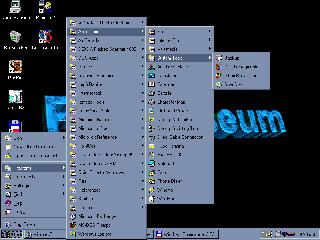
Windows 95,
released in August of 1995. A 32-bit system providing full
pre-emptive multitasking, advanced file systems, threading, networking and more.
Includes MS-DOS 7.0, but takes over from DOS completely after starting. Also
includes a completely revised user interface. |
 |
Click here to see Windows 98 crash in Bill Gates
face.(1.7megs Quick Time movie)
|
Windows CE has the look and feel of Windows 95
and NT. Users familiar with either of these operating systems are able
to instantly use Handheld PCs and Palm-size PCs.
Windows CE 1.0 devices appeared in November 1996. Over the next
year, approximately 500,000 Handheld PC units were sold worldwide.
Click
here for more on the Windows CE/OS Windows CE 2.0 became
available in early 1998 addresses most of the problems experienced by
Windows CE 1.0 users and also added features to the operating system
that make it more viable for use by corporate rather than home users.

Windows CE 3.0 Availability June 15, 2000 -- Embedded operating
system and its comprehensive development tools -- Platform Builder 3.0
and eMbedded Visual Tools 3.0 -- which enable developers to build rich
embedded devices that demand dynamic applications and Internet services.
Windows CE 3.0 combines the flexibility and the reliability of an
embedded platform with the power of Windows and the Internet. |
 Windows 98, released in June of 1998. Integrated Web Browsing gives your
desktop a browser-like interface. You will 'browse' everything, including stuff
on your local computer. Active Desktop allows you to setup your desktop to be
your personal web page, complete with links and any web content. You can also
place active desktop items, such as a stock ticker, that will update
automatically. Internet Explorer 4.0 New browser that supports HTML 4.0 and has
an enhanced user interface. ACPI supports On-Now specs for better power
management of PCs. FAT32 with Conversion utility Enhanced & Efficient
support for larger hard drives. Includes a utility to convert your FAT16 to a
FAT32 partition. Multiple Display Support can expand your desktop onto up to 8
connected monitors. New Hardware support will support the latest technology such
as DVD, Firewire, USB, and AGP. Win32 Driver model Uses same driver model as
Windows NT 5.0 Disk Defragmenter Wizard Enhanced hard drive defragmenter to
speed up access to files and applications. |
Windows NT 5.0
will include a host of new features. Like Windows 98, it
will integrate Internet Explorer 4.0 into the operating system. This new
interface will be matched up with the Distributed File System, which
Microsoft says will provide "a logical way to organize and navigate the
huge volume of information an enterprise assembles on servers,
independent of where the servers are physically located.
As of November 1998, NT 5.0 will be known as Windows 2000,
making NT a "mainstream" operating system.
|
 Feb.
17 2000, Windows 2000 provides an
impressive platform of Internet, intranet, extranet, and management
applications that integrate tightly with Active Directory. You can set
up virtual private networks - secure, encrypted connections across the
Internet - with your choice of protocol. You can encrypt data on the
network or on-disk. You can give users consistent access to the same
files and objects from any network-connected PC. You can use the Windows
Installer to distribute software to users over the LAN. |
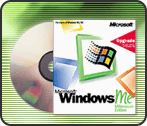 Thursday
Sep. 14, 2000 Microsoft released Windows Me, short for Millennium
Edition, which is aimed at the home user. The Me operating system boasts
some enhanced multimedia features, such as an automated video editor and
improved Internet plumbing. But unlike Microsoft's Windows 2000 OS which
offers advanced security, reliability, and networking features Windows
Me is basically just an upgrade to the DOS-based code on which previous
Windows versions have been built. |
 Microsoft officially launches
Windows XP it on October 25th.
2001.
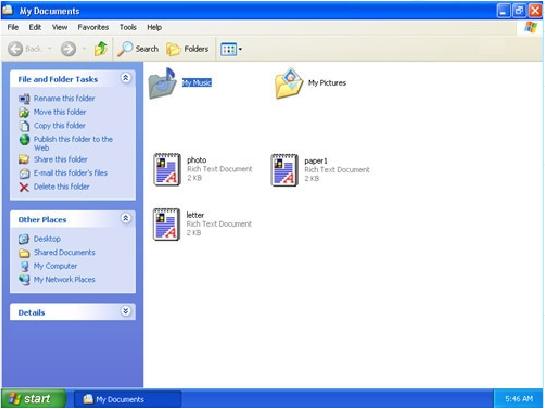
XP is a whole new kind of Windows for consumers. Under the hood,
it contains the 32-bit kernel and driver set from Windows NT and Windows 2000.
Naturally it has tons of new features that no previous version of Windows has,
but it also doesn't ignore the past--old DOS and Windows programs will still
run, and may even run better.
XP comes in two flavours: Home and Professional. XP Home is a $99
upgrade ($199 for the full version) and Professional is a $199 upgrade ($299 for
the full version). Recognizing that many homes have more than one PC, Microsoft
also plans to offer discounts of $8 to $12 off the price of additional upgrades
for home users (the Open Licensing Program is still available for business or
home users who need 5 or more copies). That's fortunate because you'll need the
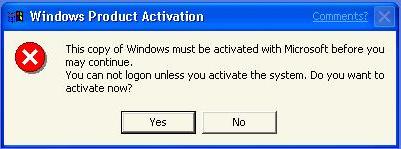
additional licenses since the Product Activation feature makes it all but
impossible to install a single copy on more than one PC
 |
top>>
|
 :

